Discovery on the Road: Traveling Exhibits and Discovery Kits
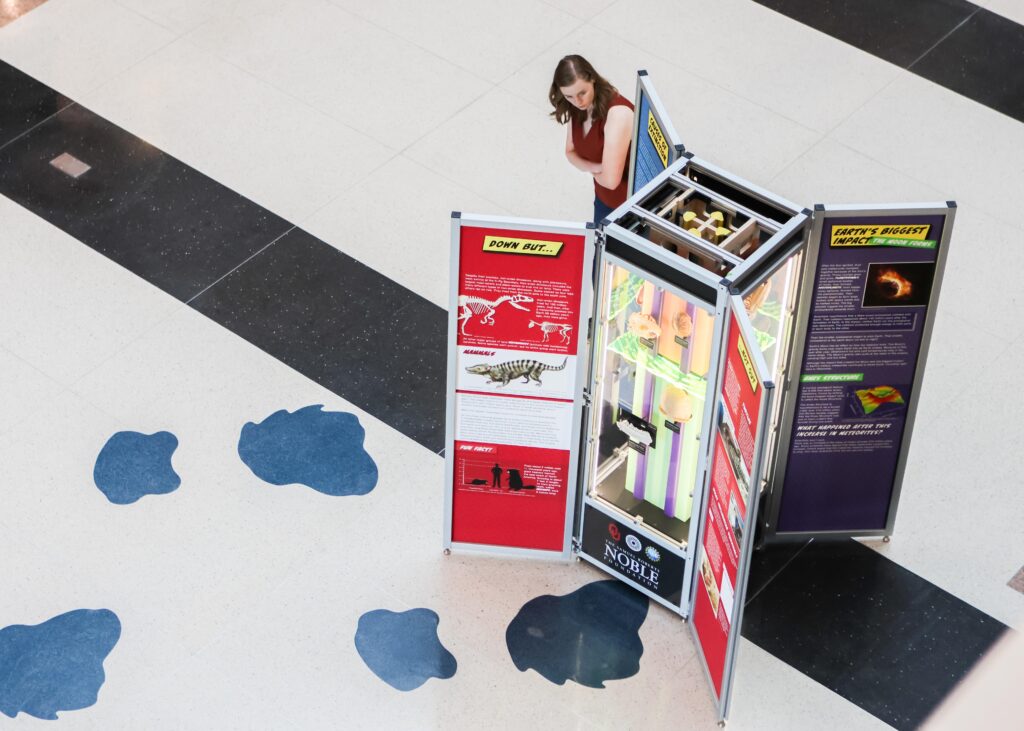
Bring Oklahoma’s state museum of natural history to you! Discovery on the Road, the Sam Noble Oklahoma Museum of Natural History’s traveling exhibit and Discovery Kit program, brings exhibit cases and activity kits to schools and libraries around the state. Choose from several different topics that are aligned to Oklahoma state curriculum standards (OAS).
The development, maintenance, and delivery of the Discovery on the Road traveling exhibit cases and Discovery kits are funded by grants from The Noble Foundation, the National Science Foundation, and the Institute for Museum and Library Services, as well as generous donors and round-up donations from museum visitors.
Discovery Kits: Bring Museum Resources to Your Class
Discovery Kits bring museum science exploration to K-12 students and classrooms across Oklahoma. Each kit features a range of museum objects, in addition to science or social studies curricula for grades K-12 that meet Oklahoma Academic Standards (OAS). Kits can be checked out for a two-week period.
Discovery Kits for a range of subjects and grade levels are currently available thanks to generous round up donations from our visitors and grants from the Institute of Museum and Library Services (IMLS), the National Science Foundation (NSF), and the Noble Foundation. Discovery Kits may be picked-up at the museum, shipped to a public school more than 60 miles from the museum, or accessed online by downloading a Digital Discovery Kit.
Libraries and Homeschool educators are welcome to reserve Discovery Kits throughout the months of June, July and August. During the school year (September through May), home school educators may be placed on a wait list until a kit becomes available.
Learn more about each of the Discovery Kits for your grade below!
Discovering Dinosaurs
Theme
Paleontology
Specimens Included
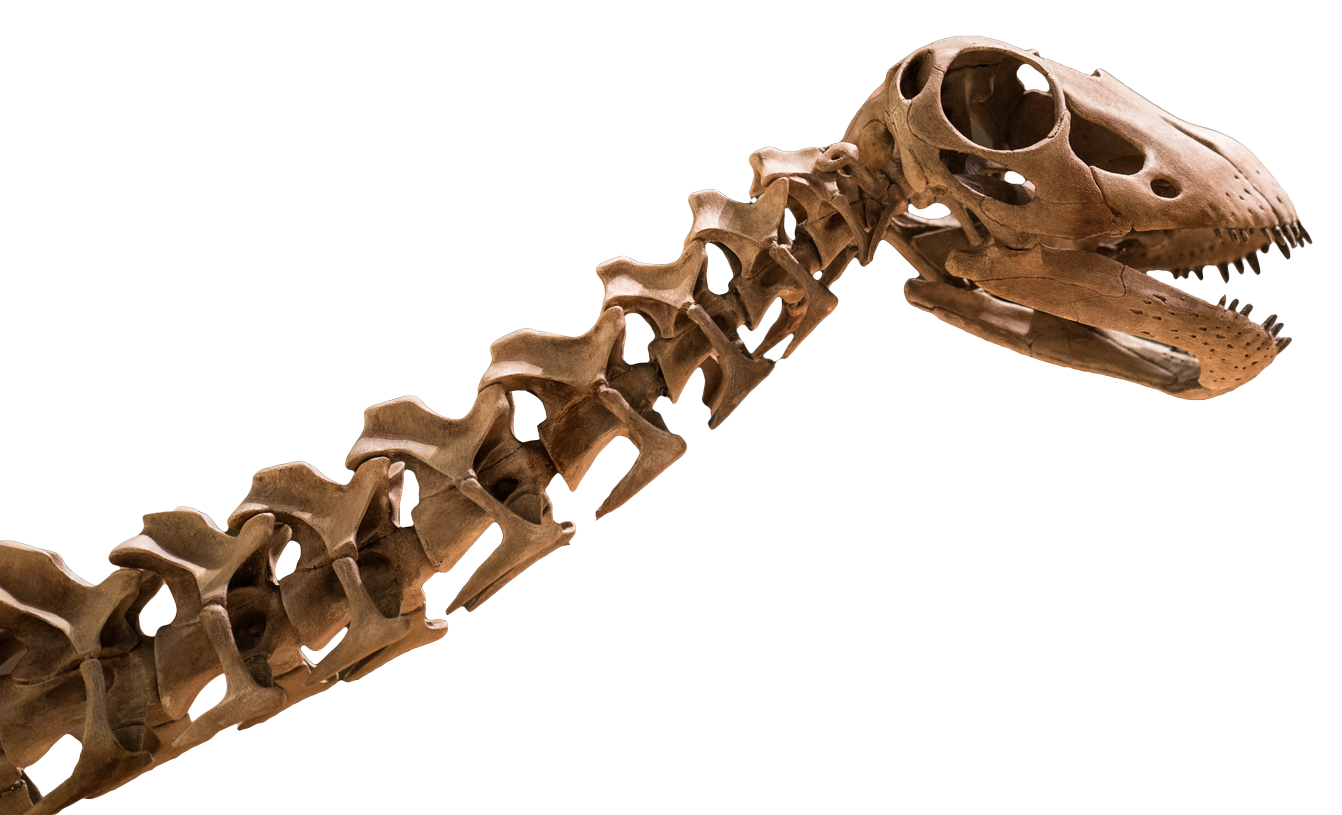
Fossils and fossil casts (Apatosaurus jaw, fossil shell, Oviraptor egg, Oviraptor embryo model, short theropod egg, Tenontosaurus jaw, Tyrannosaurus tooth) and replicas of modern animal specimens (American robin egg, moon snail shell, raven egg)
Activities Included
“Fossil Formation”: Students will discover how dinosaur bones turn to fossils through investigating museum specimens, reading a book and performing a simple experiment.
“Dino Eggs”: Students will discover that dinosaurs laid eggs like some animals today by comparing modern and fossil eggs, reading a book and drawing a picture of an egg-laying animal.
“Talking about Teeth”: Students will discover what dinosaurs ate by looking at their own teeth, reading a book, interacting with museum specimens and making dinosaur teeth from Playdough.

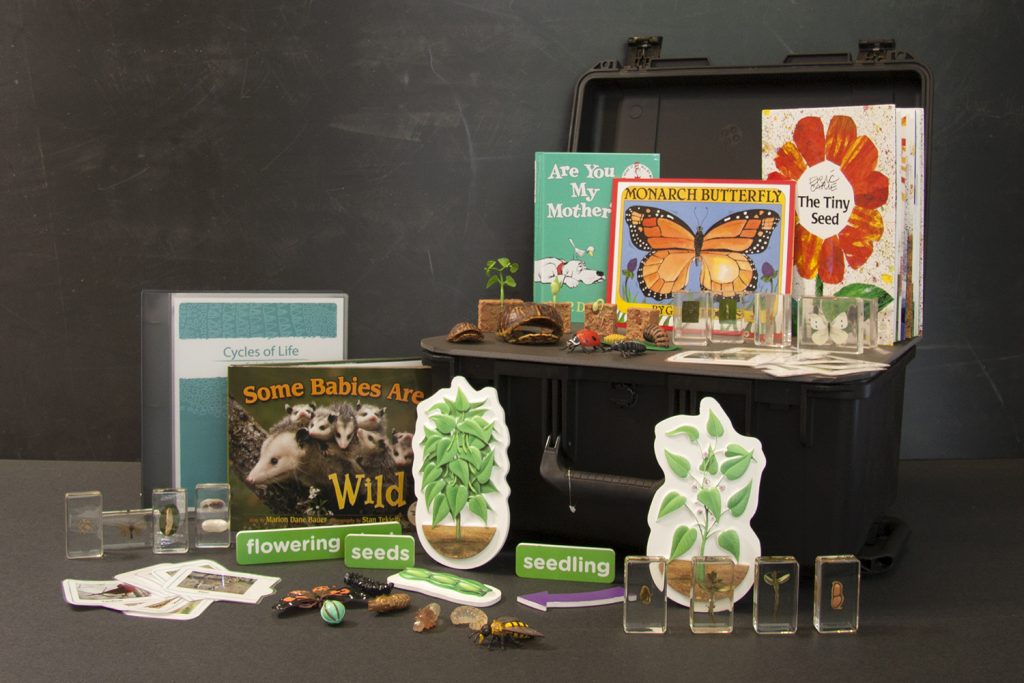
Cycles of Life
Theme
Biology, life cycles
Specimens Included
Baby turtle shell, adult turtle shell, plastic bean germination set acrylic life cycle sets (butterfly, frog, moth, peanut), and plastic life cycle sets (butterfly, honey bee, ladybug).
Activities Included
“Insect Life Cycles”: Students will understand how insects grow and change by listening to a story about a butterfly life cycle and arranging acrylic life cycles in the correct order.
“Plant Life Cycles”: Students will learn the stages of a plant life cycle by listening to a story, investigating a bean germination mount, and arranging magnetic life cycle pieces in the correct order as a class.
“Do We Look Alike?”: Students will discover how some animals do or do not resemble their parents by exploring museum specimens and completing a baby animal puzzle.
Celebrating Culture
Theme
Culture
Artifacts Included
Moccasin, ceramic pot, basket, wooden mask, musical Instrument, ring and pin game, wooden bowl
Activities Included
“People and Culture”: Students will explore the meaning of culture by comparing the clothing, housing and food of different peoples and learning about Plains Native American culture.
“Let’s Celebrate!”: Students will discover how and why people celebrate by exploring cultural objects, reading about and comparing different holiday traditions and drawing a picture of a celebration that is important to them. (Holiday books included in the kit: Chinese New Year, Diwali, El Dia de Los Muertos, Flag Day, Independence Day, Martin Luther King Day, and Veteran’s Day)
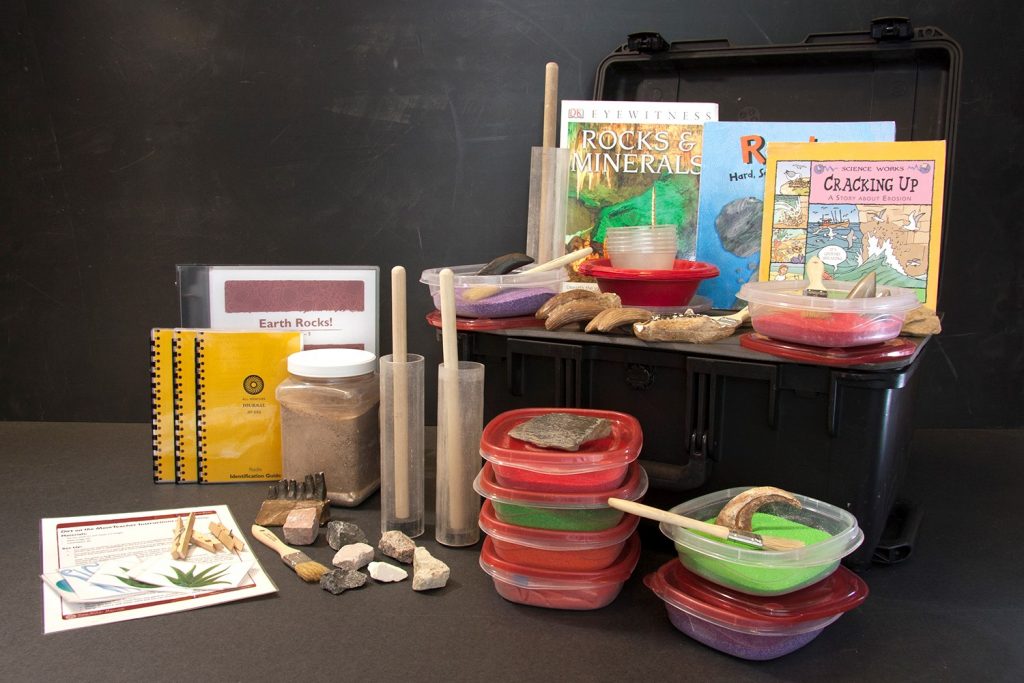
Earth Rocks!
Theme
Geology, Paleontology
Specimens Included
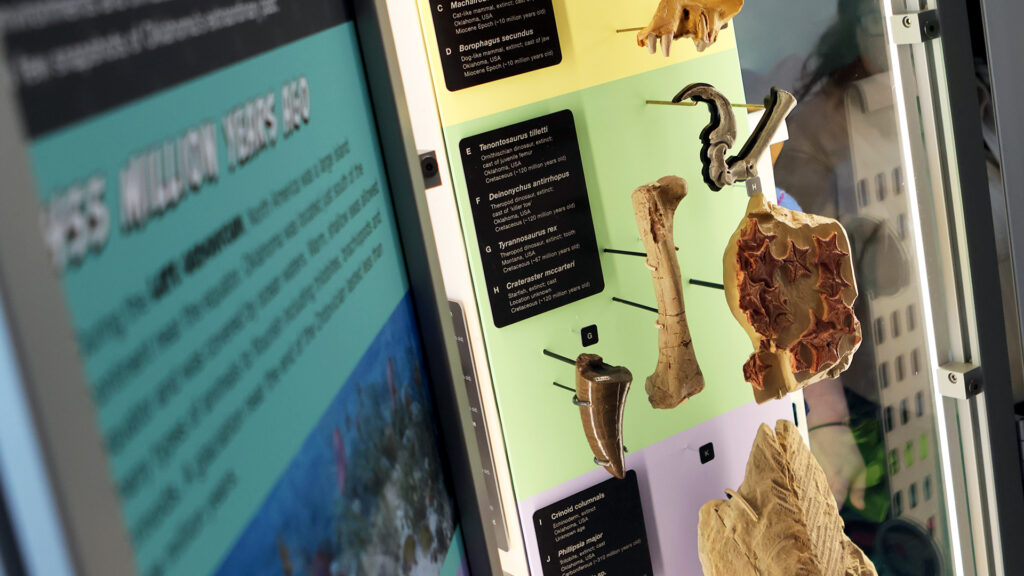
Fossils and fossil casts (trilobites, brachiopods, ammonites, crinoid stems, Deinonychus claws, juvenile Tenontosaurus jaws, bison teeth, ground sloth claws, Allosaurus teeth, ferns, Apatosaurus teeth, Calamites and shark teeth) and rock specimens (basalt, gabbro, granite, limestone, quartz, rhyolite, sandstone and slate).
Activities Included
“Erosion”: Students will discover how erosion affects the surface of the earth through a game and an experiment that investigates different types of erosion.
“Rock Layers”: Students will discover how the layers of the earth help us figure out the age of rocks and fossils by excavating and identifying fossils.
“Oklahoma Rocks”: Students will identify different types of Oklahoma rocks and explore how they help us understand our state’s past.
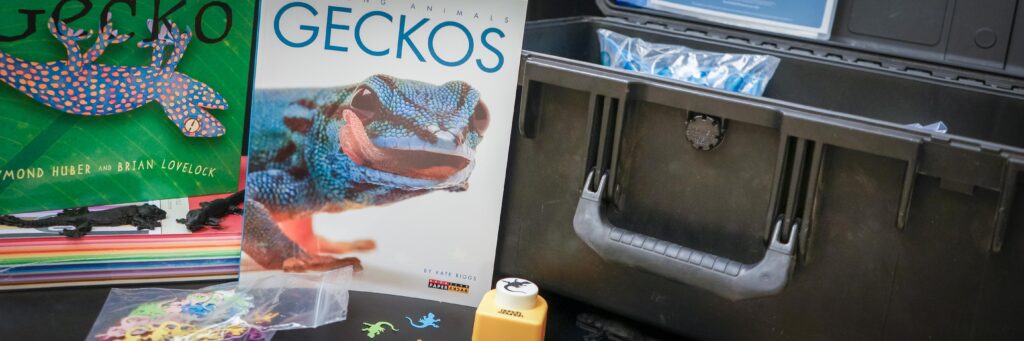
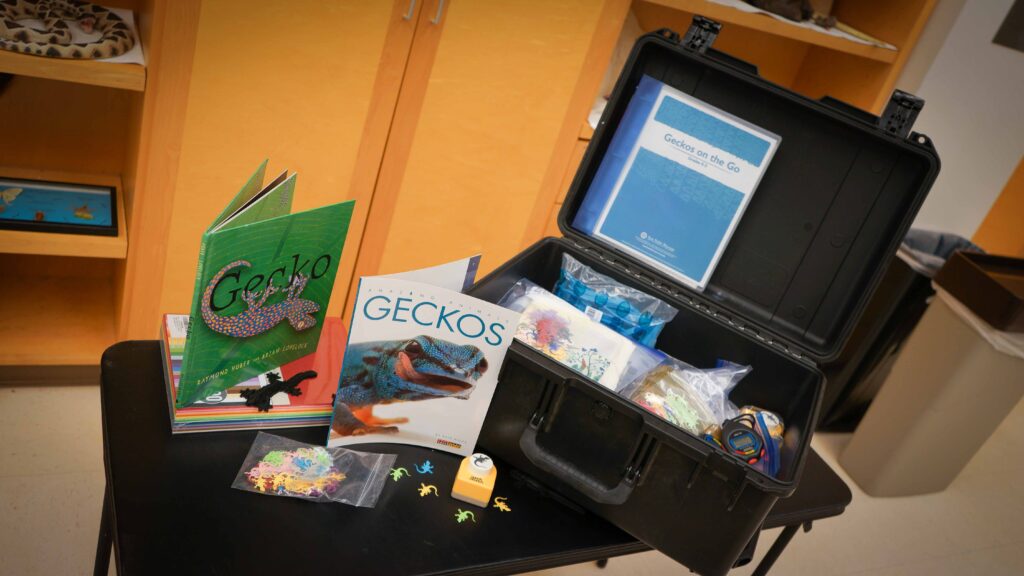
Geckos on the Go
Theme
Amphibians, Reptiles, Lizards, Camouflage, Adaptations, Flying vs. Gliding, Natural Selection
Specimens Included
3D-printed models of three lizard species
Activities Included
“Introduction to Geckos”: Students will understand how body color and shape may help geckos survive
“Geckos in Flight”: Students will understand the differences between powered flight and gliding by performing an experiment that models gliding in animals
“Avian Predation”: Students will perform an experiment that models camouflage and predation
Okie Animals
Theme
Biology, Adaptations, Ecosystems
Specimens Included
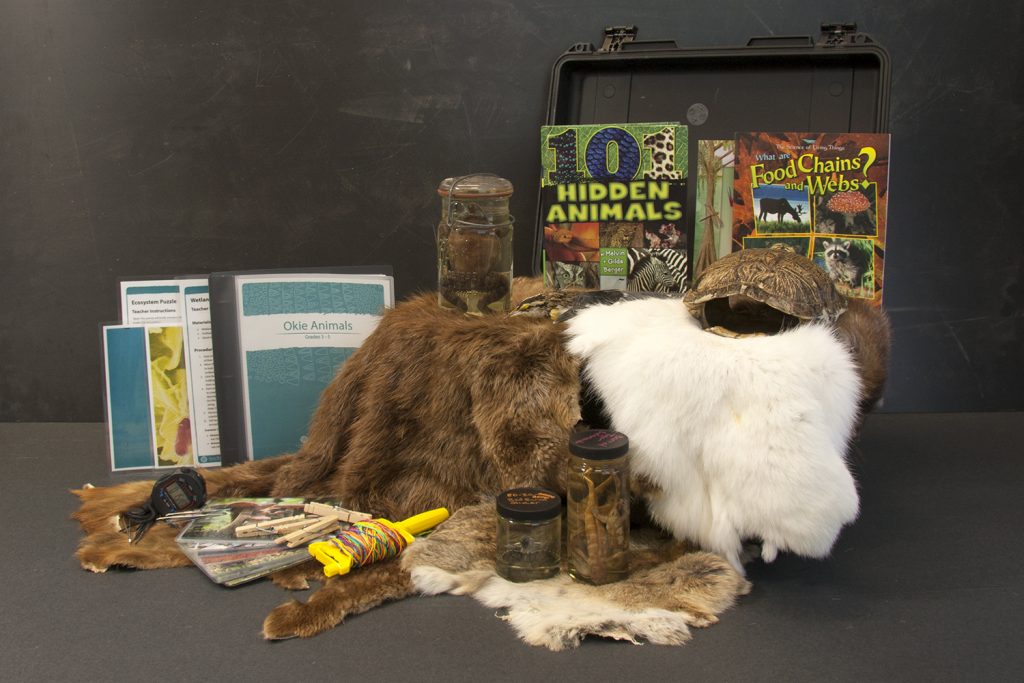
Cottontail rabbit pelt, snowshoe hare pelt, beaver pelt, muskrat pelt, barred tiger salamander, red-eared slider, belted kingfisher, Missouri river cooter shell and eastern meadowlark
Activities Included
“I Can’t See You!”: Students will learn about adaptations by performing an experiment that investigates camouflage in the wild.
“Wetland Connections”: Students will discover how living and nonliving things are connected in an ecosystem by creating a food web based on an Oklahoma wetland.
Oklahoma Artifacts
Theme
Archaeology, Native American culture
Specimens Included
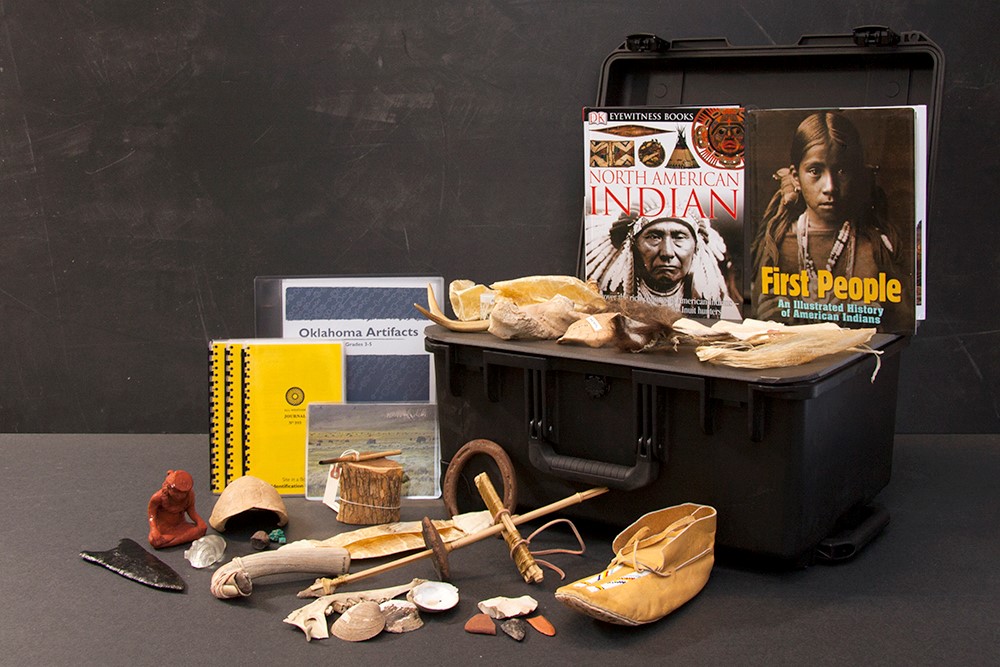
Artifacts (turtle shell paint kit, flintknapping kit, moccasin, sewing kit, pump drill, scraper, Folsom point, bison tooth, bifaces, chert flakes, deer jaw, net weights, Dalton points, clam shells, stone ax, daub, shell beads, stone hoe, Spiro points, obsidian flakes, incised pot, corn cobs and quartz) Natural Resources (stone, chert, copper, hematite, porcupine quills, bison hide and fur, horseshoe, conch shell, sinew, Bois d’arc wood, river cane, deer antler and turtle shell)
Activities Included
“People of the Plains”: Students will explore artifacts and natural resources to discover how people on the Plains in Oklahoma used natural resources, like bison, to survive.
“Site in a Box”: Students will utilize artifacts, replicas and other objects to determine what happened at real Oklahoma archaeological sites.
Explore Geology
Theme
Geology
Specimens Included
Calcite, conglomerate, quartz, rocks and minerals sets (calcite, feldspar, granite, limestone, marble, mica, quartz, and sandstone), mineral test sets (fluorite, pyrite, talc, calcite, quartz), rock cycle specimen sets (sandstone, granite, gneiss, pumice, vesicular basalt, obsidian, rhyolite).
Activities Included
“Rocks and Minerals”: Students will learn the differences between rocks and minerals by investigating and comparing different rocks and minerals.
“Mighty Minerals”: Students will discover the different properties of minerals through observation and by performing tests in order to identify the minerals included.
“The Rock Cycle”: Students will understand the different parts of the rock cycle by creating their own sedimentary rocks, performing an experiment to learn about igneous rocks and creating a model of a metamorphic rock.

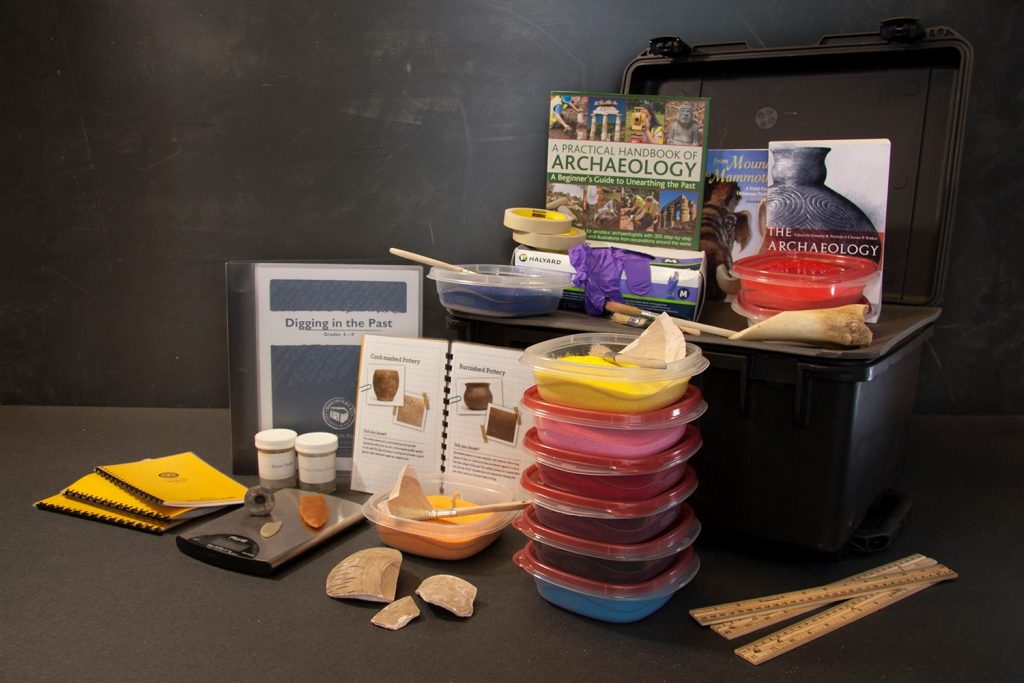
Digging in the Past
Theme
Archaeology
Artifacts Included
Tibia digging tip, biface, Washita arrow point, Fresno arrow point, corn cob, Folsom point, pipe, flakes, Creek potsherds, bison tooth, Clovis point and bone hook
Activities Included
“Stratigraphy”: Students will excavate artifacts and collect data from different time periods in Oklahoma’s past, then explore how the location of an artifact in the earth can help archaeologists understand if it was older or younger than other artifacts.
“Pottery Reconstruction”: Students will reconstruct a broken ceramic pot and collect data about its design and texture. After identifying the pottery type, students will identify the Oklahoma culture that created it.
“Trash Can Archaeology”: Students will discover what archaeologists can learn about people in the past by studying their trash. Through studying the contents of modern trash cans, students will become detectives as they try to reconstruct the timeline of the people using the trashcan, the importance of the objects and what trash can tell us about our daily lives.
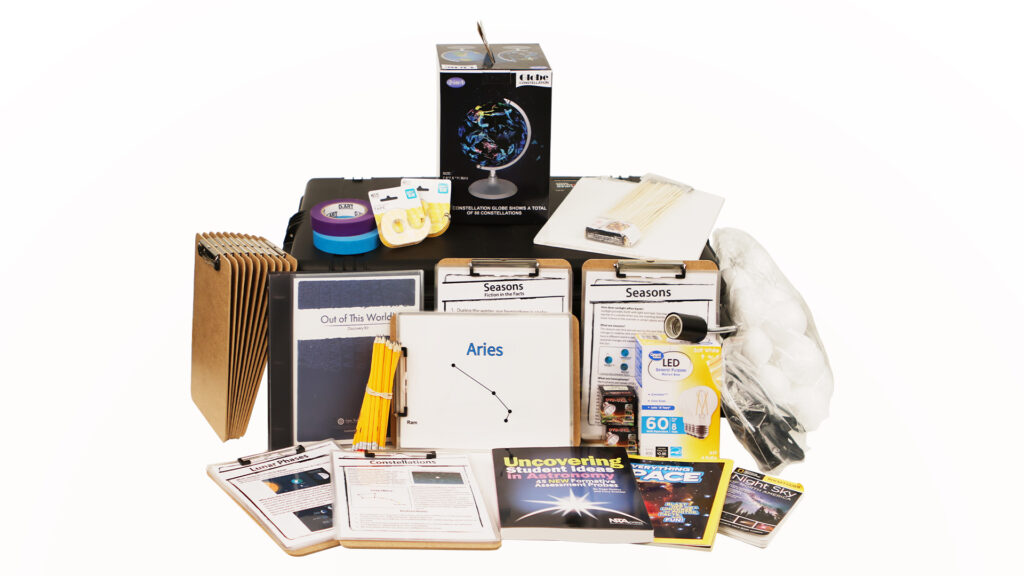
Out of this World
Theme
Astronomy
Specimens Included
None. This kit pairs well with our “Discovery on the Road” traveling exhibit cases which contain specimens.
Activities Included
“Seasons”: Students will learn what causes seasons on Earth by creating a model together as a class and then making observations.
“Constellations”: Students will learn about constellations present in the Northern Hemisphere by creating a model together and making observations. Students will also have the opportunity to explore the cultural significance of constellations and attempt to make their own novel constellations.
“Lunar Phases”: Students will work together in groups to create and observe models of lunar phases.

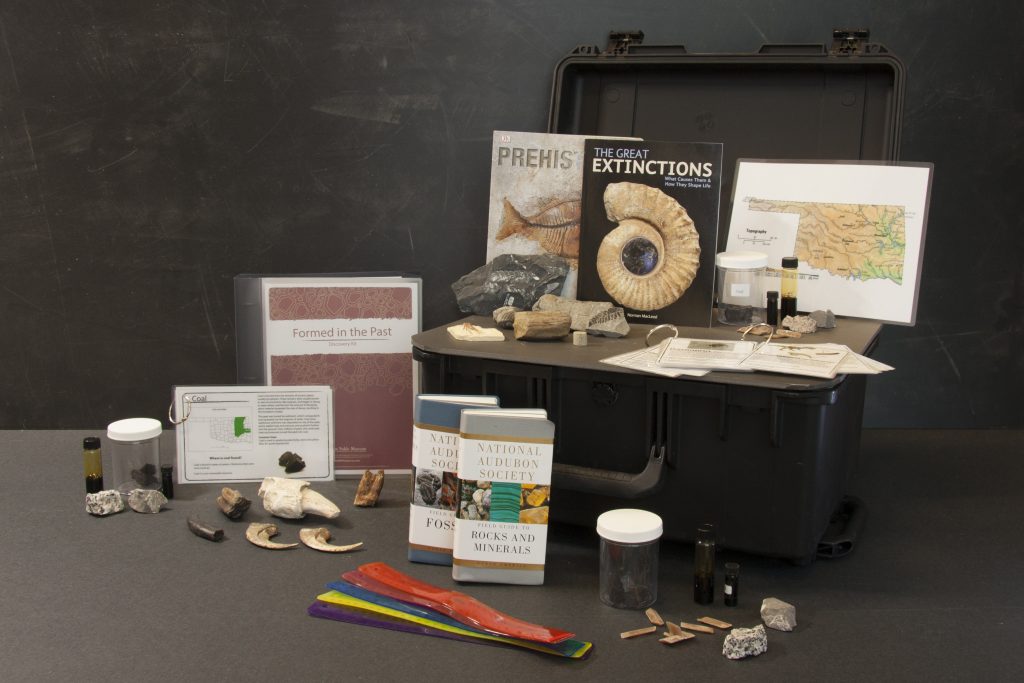
Formed in the Past
Theme
Paleontology, Geology (natural resources)
Specimens Included
Fossils and fossil casts (brachiopods, crinoids, calamite, trilobites, horn coral, shark teeth, Apatosaurus teeth, Saurophaganax teeth, giant bison teeth, ground sloth claw, ferns, bivalves, dragonfly, Walchia); natural resources (crude oil, coal, gypsum, limestone, iodine, granite)
Activities Included
“Introduction to Paleontology”: Students will learn how fossils can provide paleontologists with evidence of ancient life and how life has changed through time.
“Oklahoma Natural Resources”: Students will explore and identify Oklahoma natural resources and their uses and learn why we find these resources in different parts of the state.
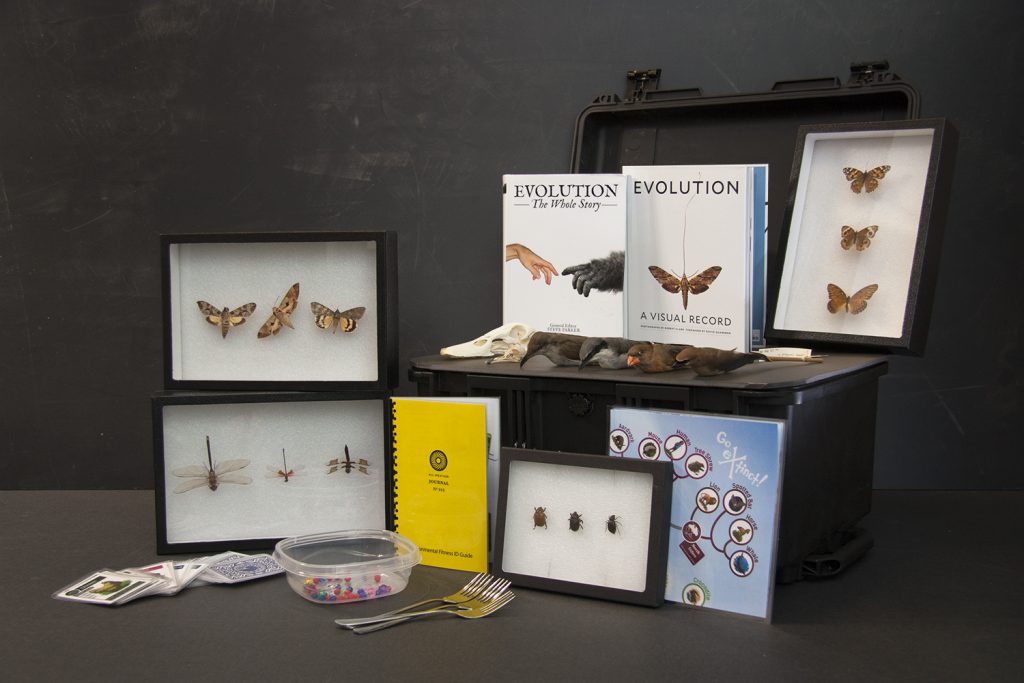
Biodiversity and Survival
Theme
Biology, Evolution
Specimens Included
Replica bird skulls, insects (including: Common Whitetail dragonfly, American Rubyspot damselfly, Clear-winged grasshopper, Carolina grasshopper, camel cricket, Spotted June beetle, Elephant beetle, Skunk beetle, Pandorus Sphinx Moth, Yellow-banded Underwing Moth, Common Buckeye butterfly, Painted Lady Butterfly, Gulf Fritillary Butterfly)
Activities Included
“Mighty Morphology”: Students will observe and compare the physical structures of insects to classify them and determine which are most closely related to each other. Through the use of a cladogram, students will investigate the ancestral relationships of the insects to understand how they diversified and verify if their hypothesis is supported.
“Environmental Fitness”: Students will investigate how an animal’s characteristics can help or hinder its chances to survive and reproduce. After completing an experiment to replicate a woodland and wetland bird feeding on different food sources, students will graph and analyze the data collected to reach a conclusion.
“Go Extinct”: Students will play a card game to reinforce knowledge of biological classification and introduce the concept of an evolutionary tree model.
Note: This kit is currently unavailable for shipping
Anthropology 101
Theme
Culture, Anthropology
Artifacts Included
Stone ax, shell hoe, clay effigy, pot, cicada effigy, Spiro point, moccasin, net weight, atlatl
Activities Included
“How to Read an Object”: Students will observe and investigate Oklahoma Native American artifacts in order to discover how objects help anthropologists learn more about a culture.
“Curating Me”: Students will learn more about how material culture is an integral resource for anthropologists to gain knowledge about a group of people. Students will then create their own object-based presentation on a group that represents them.
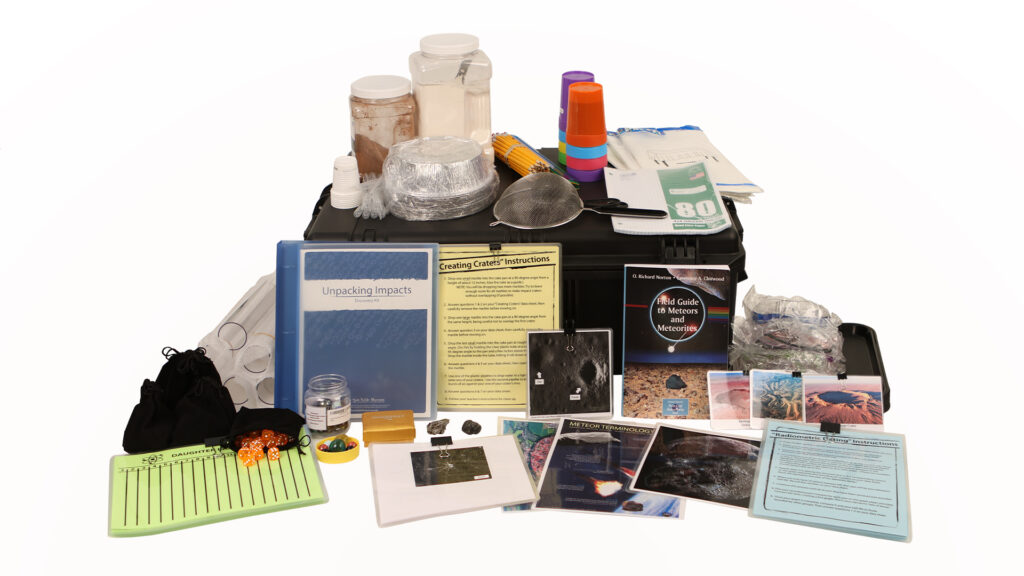
Unpacking Impacts
Theme
Astronomy
Specimens Included
Campo del Cielo meteorite, Libyan desert tektite, Impactite
Activities Included
“Creating Craters”: Students will conduct an experiment by creating impact craters and making notes about their observations. By doing so, they will gain an understanding of why studying our Moon is important to understanding Earth’s history.
“Craters Timeline”: Students will attempt to place photos of real craters on Earth in a timeline from oldest to youngest based on sight alone. Links to 3D models of the craters are also included.
“Radiometric Dating”: Students will conduct an experiment that consists of rolling dice and recording the results to get a hands-on demonstration of how radiometric dating works.
Discovery on the Road: Traveling Museum Exhibits Delivered
Our Discovery on the Road program aims to bring the wonder of natural history directly to communities across the state of Oklahoma. We understand that distance and travel time can be a barrier to accessing museum exhibits, and the solution was clear.
Discovery on the Road features portable, temporary exhibits which are organized into large, illuminated cases and cover a multitude of topics ranging from mass extinctions, to fossils, to changing prehistoric environments, and provide an engaging and educational experience for visitors of all ages. Through this initiative, rural and remote communities can enjoy museum-quality displays free of charge, ensuring far-reaching access to the collections preserved on behalf of Oklahoma residents.
Learn More
Discovery on the Road traveling exhibit cases are available to schools and libraries by request and approval. These exhibits and their companion Discovery Kits are delivered and set up free of charge, thanks to the round-up donations from generous visitors. Requesting organizations can choose from three exhibit case themes:
Geology Rules
Theme: Geology basics, the rules that govern the study of geology, rock formation, fossil formation, geologic time, radiometric dating
Grade Level: 5-12
Description: Geologists, scientists who study the Earth, use rules about rock formation and types of rock to learn how the Earth was formed, how it changes over time, and why the Earth looks the way it does today.
Making an Impact
Theme: Impact craters, how they’re formed, and what happens as a result of an impact. Other topics include the solar system, life on earth, extinction, and the formation of the moon.
Grade Level: 5-12
Description: Impact craters are visible on the Moon and on the Earth if you know how to spot them. These craters, formed when large objects like meteorites land on Earth’s surface, can sometimes have major effects on life on Earth. Students can explore Solar System objects, two major impact events, the formation of the Moon, major extinction events, and how life found a way after most of life on Earth was wiped out.
The Changing Cretaceous
Theme: Dinosaurs, plants, fossils, ecosystems, climate, plate tectonics
Grade Level: 6-12
Description: The Cretaceous Period was the last in the age of Dinosaurs, the Mesozoic Era. There were big changes in the types and numbers of dinosaurs in North America during this time. Scientists can reconstruct entire extinct ecosystems using evidence from fossils of plants and dinosaurs. Students can review the evidence to discover how scientists understand climates and habitats of the past.
The museum aims to formally open registration and distribution of Discovery on the Road cases in the fall of 2026