The Native Language Fair Honor Fund
To help sustain Native languages across the state and the nation, the Sam Noble Museum and the Department of Native American Studies in the Dodge Family College of Arts and Sciences at the University of Oklahoma have launched a new Native Language Fair Honor Fund. This page honors their memory, and provides an opportunity to support the fair in their name.
Established to honor past Native speakers, ancestors, and relatives of the past, present, and future who have worked closely with the language fair, the goal is to continue their legacy by creating a sustainable future for the fair. This fund contributes toward an endowment for the event that will generate consistent and stable funding, enabling the museum to provide students with a venue to share their Native languages and support broader language revitalization across Oklahoma.
At least 14 elders who have been longtime supporters of the language fair have passed away in recent years. Their loss is deeply felt both at the museum and in their communities. The goal is to carry on their legacies and their passion for the preservation of Native cultures and languages through the fair.
To make a contribution to the Native Language Fair Honor Fund, you can follow the link below.
To honor a specific elder, select the option title “This is an honorary or memorial gift.” Information about the specific individuals honored through the fund will be made available online and at the language fair.
Gary Lynn McAdams
Read More
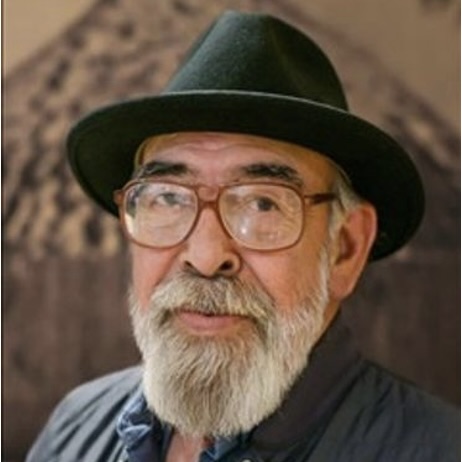
Gary McAdams was a proud member of the Wichita and Affiliated Tribes where he was an Executive Committee Member for two years, Vice president for two years, and then President for 18.5 years (1990 to 2008). He was the Tribe’s first Tribal Historic Preservation Officer and was a key figure in creating the Wichita Tribal History Center. There, he dedicated his time to researching, editing, and submitting texts for displays to ensure that the Wichita people’s history was accurately represented. He also served as a Language Consultant and Cultural Planner from 2010 until his passing.
Gary McAdams was immersed in the Wichita language, history, and culture. He spent numerous years working directly with Doris McLemore, the last fluent speaker of the Wichita and Affiliated Tribes, working to learn to speak and write the Wichita language. He served as a teacher of the language, history, and culture during his Presidency up until his passing.
Photo credit: rayandmarthas.com
Rita Jewel Coosewoon
Read More
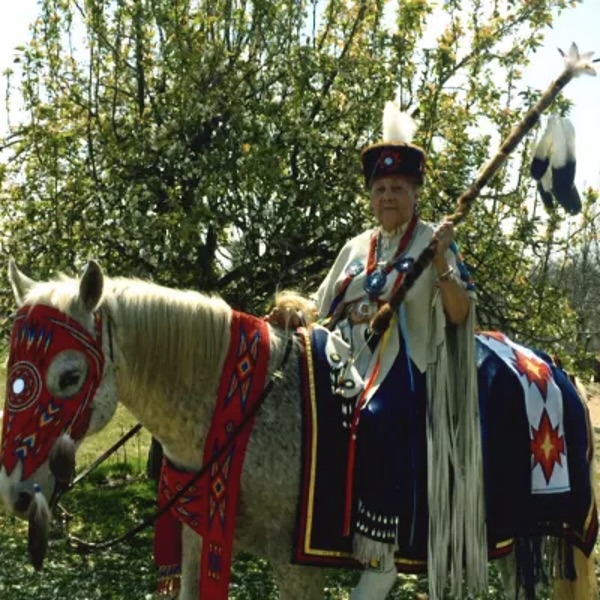
Rita Coosewoon was a proud member of the Comanche Nation of Oklahoma. She taught the Comache language as well as culture, and she played a vital part in the creation of the Comanche dictionary.
Ms. Coosewoon was a member of CIVA, Comanche Little Ponies, War Mothers, and Petarsy United Methodist Church, Spur. Her smile was known to light up the whole church.
Ms. Coosewoon enjoyed sewing, knitting, beading, making jewelry, singing, and playing the piano. She also loved traveling, shopping and collecting hats and shoes.
Photo credit: weremember.com
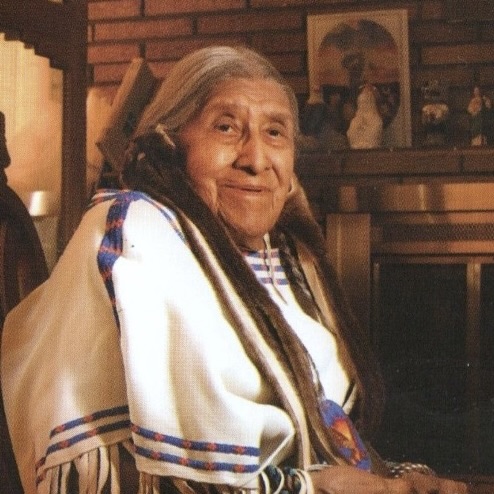
Geneva Navarro
Read More
Geneva Navarro was a member of the Comanche Nation, coming from the Kwaharu Band (Antelope) and the Penanuu Band (meaning: sting like a wasp). She is a descendant of Chief Wild Horse-Kobe (pronounced ko-bey) who was a prisoner of war at Ft. Sill in the late 1800s.
Geneva Navarro was an interpreter for her grandparents and for patients when she was a nurse. In 1993, she became a member of the Comanche Language and Cultural Preservation Committee. Soon after, she began to teach the Comanche language which she taught for close to 30 years. Geneva Navarro helped start the annual Oklahoma Native Youth Language Fair in the early 2000s. She received an Outstanding American Indian Elders recognition award as an outstanding community tribal member involved in language preservation and culture.
Photo credit: frenchfunerals.com
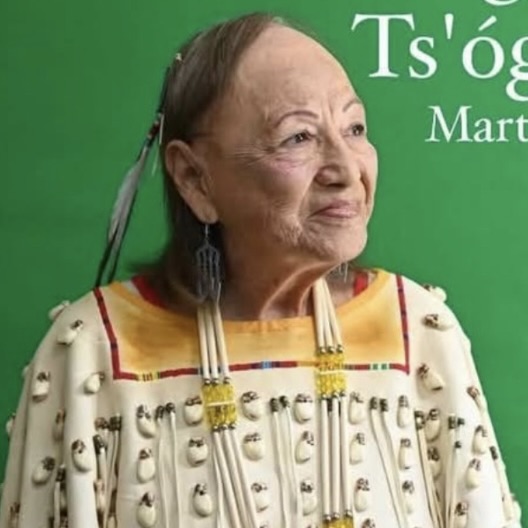
Martha Nell Poolaw
Read More
Martha Nell ‘Marti’ (Xó:gútqómà ‘Yellow Stone Woman’) Kauley Poolaw was a dedicated preservationist and benefactor of the Kiowa culture and language. She acted as an advisor and translator for Kiowa words and phrases used in movies, television, and artwork. She served on the Kiowa Language Credential Board, certifying and mentoring candidates pursuing a career teaching the Kiowa language. She was a tribal consultant for Kiowa dance and dress. Marti was also a member of the Kiowa Tribal Princess Sorority, having represented the Kiowa Tribe as their princess at the 1956 American Indian Exposition, and was a mentor and inspiration for many young women who served as Kiowa Tribal Princess. She was a dedicated supporter of the Native American Marine Corps Veterans, Kiowa Gourd Clan, Kiowa Ohomah Lodge, and Kiowa Black Leggings organizations. Marti was one of a handful of first-language Kiowa speakers remaining at the time of her passing, though thanks in part to her efforts, many are now learning Kiowa as a second language.
Her interests included traveling with her family and collecting art and beadwork from different tribes.
Photo credit: rayandmarthas.com
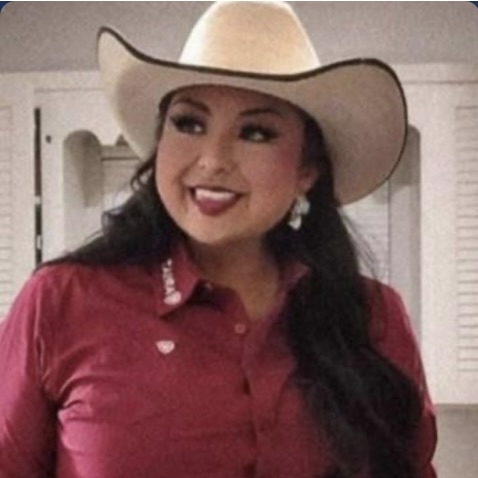
Daisy Mae Swift
Read More
Hailing from both the Cauigu and Kitikiti’sh peoples, Daisy represented each tribal nation in a variety of esteemed capacities: as the Wichita Tribal Princess in 2009, as the 2010 Indian Club Princess, and as the Southwest Oklahoma Vietnam Veterans Association Princess throughout her teenage years. She relished any opportunity to engage in traditional dance, song, or hand drum collaborations with her brother Ryan. She was one of the first performers at the first Oklahoma Native American Youth Language Fair.
She honored the customs of her tribal lineage and infused the lives of those around her with vivacious humor and a steadfast commitment to family. For much of her early life, Ms. Swift-Sage attended Anadarko Public Schools, where she thrived as an exceptional pupil and member of the Gifted and Talented programs. She continued her education at Riverside Indian School and Oklahoma City Community College; in her post-secondary academic career, she developed an animating passion for childcare and teaching.
Photo credit: rayandmarthas.com
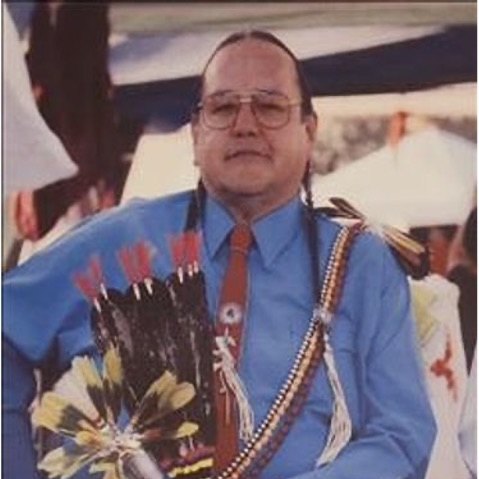
Phil Raymond Dupoint
Read More
Dr. Phil Raymond ‘Joe Fish’ Dupoint Topoie took immense pride in the fact that he was a full-blood member of the Kiowa Tribe of Oklahoma and a direct descendant of Chief Sate-T’hai-Day and Chief Ahpeahtone. Joe was a devoted member of the Kiowa Native American Church, Headsman for the Kiowa Gourd Clan, ‘Grandpa Rabbit’ for the Kiowa Gourd Clan, and the Principal Singer for Kiowa Black Leggings Society. He traveled extensively throughout the country leading his drum group Bad Medicine. His life’s work was sharing his knowledge of Kiowa teachings and protocol, and he was a former Project Coordinator for the Kiowa Language Program, and was also Tribal Historian. He received an Honorary Doctorate of Humane Letters from Bacone College for his contribution to the cultural, spiritual, and ceremonial health and well-being of the Kiowa People.
In a 2013 interview he said, “I love being a part of it…I do the best I can to uphold my traditions and my culture, because the only thing I can say is that God Almighty made me who I am,” Dupoint said. “He made me a Kiowa. He didn’t make me nothing else. So I love my traditions as a Kiowa. I love them.”
Photo credit: rayandmarthas.com
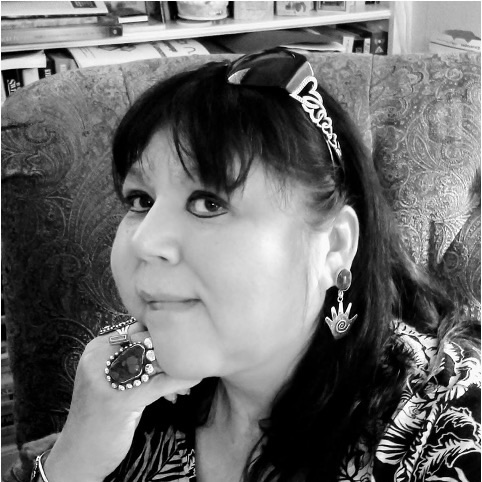
Donna Barrone
Read More
Donna Barrone was a longtime teacher of the Osage Language, and an esteemed cook. She dedicated herself to the cultural needs of her community. As a member of the Osage 𐓬𐓘𐓮𐓶𐓪𐓧𐓣͘ (pah-su-olin) district, she served on the 𐓣͘𐓧𐓪͘𐓯𐓤𐓘 (in-lon-shka) committee for over twenty years for several drum keepers. She was often sought for her knowledge and skill as a cook and regularly served at functions for the Grayhorse people. She also held various elected positions as a member of the Pahsuelee club for forty-six years. As a language teacher, Donna taught students of all ages in many settings but particularly enjoyed bringing the community together in Fairfax for language classes and an evening meal. Her contributions to furthering the Osage language and culture are evident in the number of lives she touched. We appreciate her dedication and are grateful for the impact she has left.
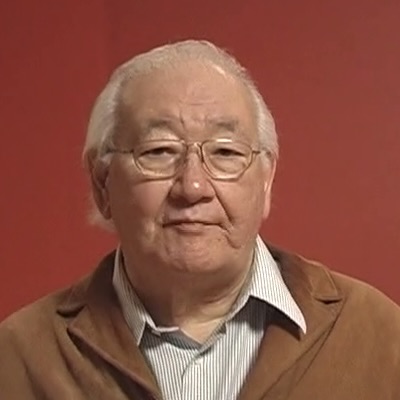
N. Scott Momaday
Read More
Navarre Scott Momaday was born in Lawton, Oklahoma, to a father of Kiowa heritage and a mother of European and Cherokee heritage. He spent much of his childhood on Navajo, Apache, and Jemez Pueblo reservations in the Southwest, where his parents taught. He earned his BA from the University of New Mexico and a MA and PhD from Stanford University. His first novel House Made of Dawn (1968) won a Pulitzer Prize and brought attention to Momaday as a leading figure in a Native American literary renaissance. His subsequent works have shown what richness and power can result from blending Native-American oral traditions with classical European forms. Those works include more than 13 books of poetry, plays, prose, and children’s stories. In addition to the Pulitzer Prize, Momaday has been awarded numerous honors, including a National Medal of Arts, an Academy of American Poets Prize, a Guggenheim Fellowship, and 12 honorary degrees. He was the Regents Professor of the Humanities at the University of Arizona, where he started teaching in 1982.
In 2007, he was one of the guest speakers at the Oklahoma Native American Youth Language Fair.
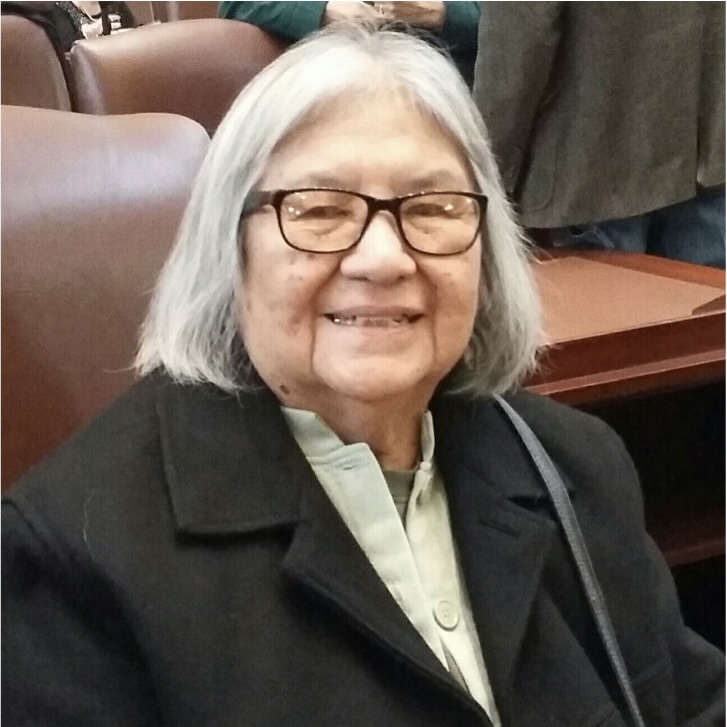
Pauline Wahpepah
Read More
Pauline White Wahpepah was a member of the Absentee Shawnee Tribe. She was raised by her grandparents Annie Fish Atchico Hayworth (Absentee Shawnee) and James Hayworth (Kickapoo). From her grandparents she became a fluent Shawnee speaker as well as learning English from the public schools. She later attended the Indian Boarding School system. Upon graduating from Riverside Indian School, she attended Haskell Industrial Training School, eventually participating in the relocation program and moving to Los Angeles, California. Throughout this time, she remained fluent by finding family and friends with whom she could continue using her languages. Upon returning to Oklahoma, she worked in various programs that allowed her to serve as an interpreter. This opportunity allowed her to witness how vulnerable Native languages were becoming. She began her work in language preservation while obtaining her Masters in Bilingual Education and certification to teach Native languages. Her approach became that as long as there is someone learning their language, there is hope that their language will continue and there will always be Native peoples. She acknowledged that it is a hard and arduous task, but it is important not to stop. The Native Language Fair was always a rewarding experience for her to see so many children using their languages.
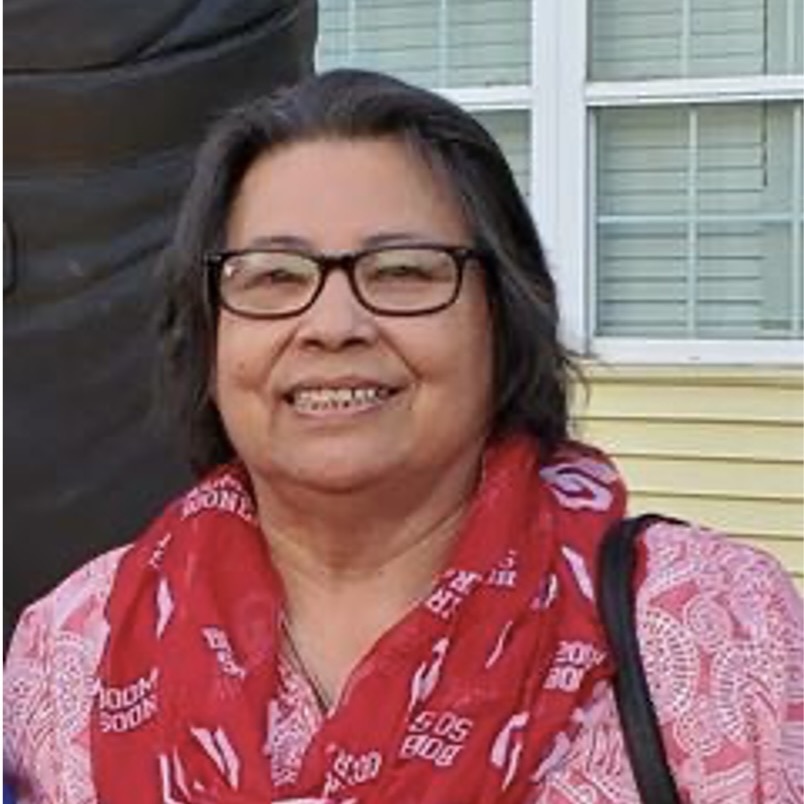
Virginia Espinoza
Read More
Dr. Rev. Virginia Espinoza was an accomplished and much beloved Choctaw language teacher and pastor. She grew up in Boswell, Oklahoma and attended Boswell School. She earned a degree in teaching from Southeastern Oklahoma State University and soon began working for the Choctaw Nation’s Head Start program in Harmony and Durant. From 2001 onward, she taught the Choctaw language at the Choctaw Nation Headquarters. She considered it a privilege to teach the language. She brought her students to the Oklahoma Native American Youth Language Fair for many years, and also participated in the Fair as a judge.
Virginia was also known for her service to the Presbyterian Church. She earned a doctorate in theology from Memphis Theological Seminary in 1998. She went on to pastor at many churches throughout Southeastern Oklahoma to the time of her passing. She also served on many Presbyterian Church committees.
Virginia is remembered by those who knew her for her dedication to her faith and teaching the Choctaw language.

Curtis Billy
Read More
Curtis “Tody” Billy was a lifelong educator, fluent Choctaw speaker, culture carrier, artist, church elder, and youth mentor. Curtis served on the Oklahoma Native American Youth Language Fair board for 18 years and took a group of students to the first language fair in 2003 in his role as Indian Education Coordinator and Guidance Counselor for Broken Bow Public Schools. He was passionate about preserving the Choctaw language and culture. He also taught language classes at Southeastern Oklahoma State University through the Choctaw Nation of Oklahoma School of Choctaw Language until his passing.
His legacy lives on through many televised and print interviews. The Curtis “Tody” Billy stickball field in Broken Bow, OK was named in his honor. Regarding language and culture, he was quoted as saying “knowing the history and the culture are good, but the language is something that defines us as a people.” He was a firm believer in the language being used to pass on traditions and stories. He never hesitated to impart cultural or spiritual knowledge to others. Family and friends will forever cherish the many memories of his wisdom, wit, knowledge, and spirituality.
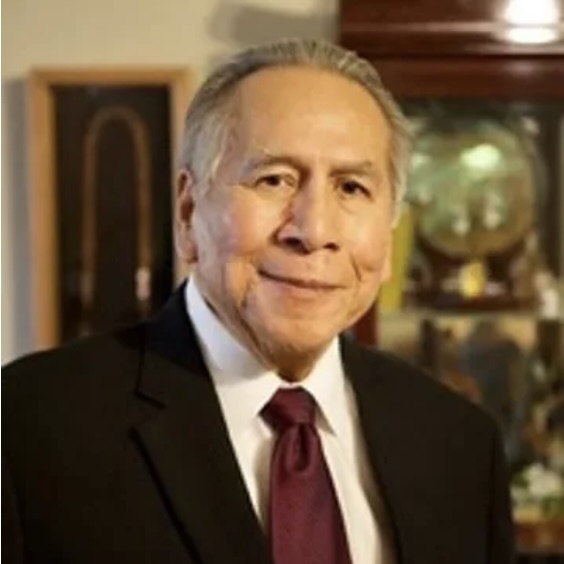
Kelly Haney
Read More
Kelly was a successful and well-known artist. He created “The Guardian” sculpture on top of the Oklahoma State Capitol, and many other sculptures, paintings, and lithographs reflecting native culture and enjoyed by art collectors around the world. Kelly was also a successful businessman, operating art galleries that helped enhance the careers of many Native American artists over the years. He was proud to be a part of the development of the First Americans Museum in OKC. A fullblood Seminole/Creek citizen, he served as planner and business manager for the Nation between 1973 and 1975, as a Seminole Nation Councilperson from 1972 until 1976, and as Principal Chief from 2005 until 2009. He produced and hosted a local television program, ”Tribes: Voices of the Land”, between 1972 and 1976. Kelly served as an Oklahoma state representative between 1980 and 1986, and as an Oklahoma state senator between 1986 and 2002—the first fullblood Native American elected to those offices. He made important contributions to the development of working relationships between tribal nations in Oklahoma and the state, such as legislation establishing the first tribal-state compact, and authoring the Oklahoma Indian Child Welfare Act. Kelly also served in the Oklahoma National Guard between 1960 and 1966.
Leroy Sealy
Read More
Leroy had a passion for his Choctaw heritage and language. He worked at the University of Oklahoma as a Choctaw language instructor and taught Choctaw language to adults and high school students. He also was accomplished in bead work.
He was a faithful member of the First Indian Baptist Church in McAlester. He enjoyed gospel singings where he would sing and play the piano. He attended Eastern Oklahoma State College and the University of Oklahoma where he found his love for OU football. Leroy was devoted to his family, especially his nieces and nephews.
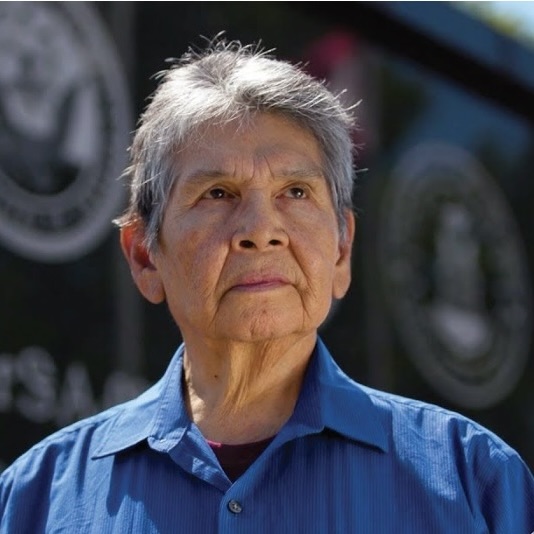
Durbin Feeling
Read More
Durbin’s passion was for the preservation of the Cherokee language. This was only superseded by his constant learning of the Word of God. He served in the Army in Vietnam. He attended Bacone Indian College, and is an honorary Ohio State Buckeye. He started the first Cherokee language class at OU and his other accomplishments were numerous. He loved his wife “Chrissy” more than anything and he is greatly missed. His legacy will live on at the great Cherokee Nation Immersion Charter School in the hearts and lives of all who pass through it. If he were here today his only direction would be: ‘Read the Bible’.
Becky Meyer
Read More
A native Oklahoman and member of the Cherokee Nation, Becky was an active member of the Native American community in the Norman and Oklahoma City areas. A former elementary school teacher, Becky volunteered her time to promote Native American language and art. She served in several capacities for Red Earth, especially with youth art activities. She volunteered at the registration desk at the Oklahoman Native American Youth Language Fair for many years. She also served as a judge for the Poster art category for several years. She served as a volunteer docent in the People of Oklahoma Gallery at the Sam Noble Museum from 2000 to the time of her passing.
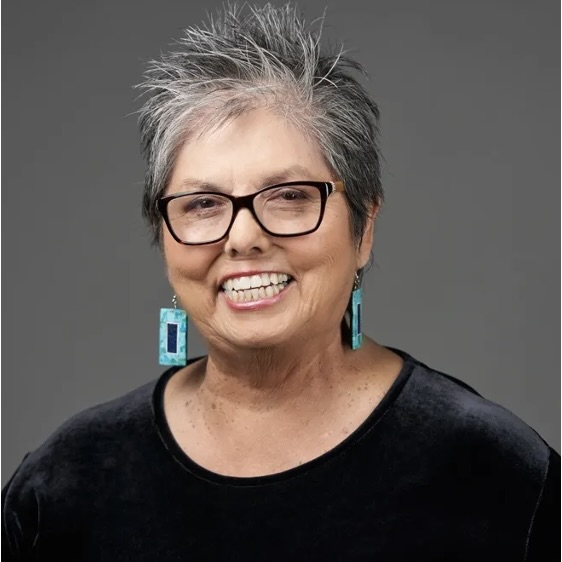
Juanita Pahdopony
Read More
Juanita Pahdopony was a beloved Comanche elder and an invited speaker at the 2017 Language Fair. Her love-filled teachings as an elder, mentor, artist, and consultant were grounded in Comanche epistemology, knowledge, arts, and film. She was the lead culture and language consultant for the first season of the AMC television series The Son, which she also advised on as an administrator and art professor at Comanche Nation College. She also co-starred in Lummi filmmaker Steffany Suttle’s 2008 documentary Fry Bread Babes about Native women’s representation in American pop culture, and co-produced the short film Thistle Creek (2020), which features strong Comanche women representing in front of and behind the camera. She was also a consultant on the 2022 film Prey, which is dedicated to her memory and stands as a tribute to her everlasting legacy.
‘Auntie ‘Nita’ helped set forth an enriching and collaborative model for film production, and her foundational consulting continues to inspire creative Natives. May her beauty, generosity, and art continue to be a light in this world and beyond, and may her loving spirit be honored and reach and inspire generations to come. U kuma kutu nu, Auntie. Always.
Photo credit: chrisMARTIN.tv

Henry Lieb
Read More
Henry Lieb attended school at Pawnee & Chilocco. After school he joined the US Navy where he proudly served his country as a brave soldier. He was stationed on several important battleships during the WWII. One ship was even involved in the nuclear bomb testing. Upon returning from the War, he was given a veteran song composed by Sylvester Warrior. He specialized in the history and the language of the Ponca Tribe. In doing so he assisted several tribes over the years with their language including the Kaw, Osage, Otoe-Missouria and the Northern Ponca Tribe of Nebraska. He was also one of the last fluent speakers of the Ponca Tribe and the last of the elder elders that served on the original Ponca Language Arts Council. During his time on the PLAC, they developed their version of the Ponca Alphabet which was duly adopted by the Ponca Business Committee. He was the oldest member of the Osage Clan of the Ponca Tribe.
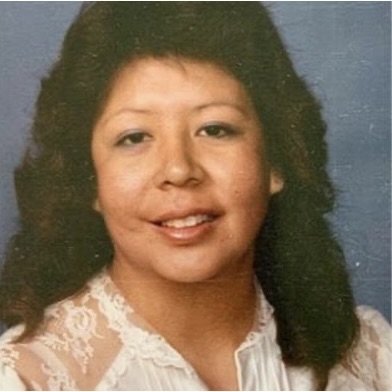
Viola Zumwalt
Read More
Viola was a member of The Choctaw Nation of Oklahoma. She attend The University of Tulsa, majoring in Secondary Education. She graduated from Southeastern State University in 1978 with her bachelors degree and earned her Masters degree from Southwestern State University 1981.
Viola moved to the Anadarko area in 1980 to work for Riverside Indian School as an English Teacher. She lead the National Honor Society for many years. She met and had many special friends (co-workers) while working for RIS. She retired in May 2020 with 40 years of Federal service under the Bureau of Indian Affairs.
Shirley Davilla
Read More
Shirley was a member of the Wichita & Affiliated Tribes. She served as chairman to the Wichita Housing Authority, served on the Wichita Foster Care Review Board, served in the Wichita Service Club, and served for many years on the Wichita Executive Committee. Her greatest contribution to the tribe was her commitment to revitalizing the Wichita language. She worked tirelessly with Gary McAdams to create Literature to provide a foundation for future generations. She always had an open door & wanted to help anyone in need.
She was employed with the Anadarko Hospital, Friendship Manor nursing home, Riverside Indian School, as a loving cottage mother to many Native American students. She also worked at the Wichita Tribe in several capacities, eventually retiring from the WCD WIC program. Shirley also served on many boards including Anadarko City Council, Riverside School Board, the OIO Board, as treasurer of the American Indian Exposition, and also the WCD Enterprises Board of Directors.
Joyce Twins
Read More
Joyce served as a language instructor for the Native American Indian Language Studies at the University of Oklahoma, Southwestern Oklahoma State University and she taught the native language in several high schools. She worked many years for the Cheyenne and Arapaho Tribes of Oklahoma; she was a planner for the planning department; the director of the language and library program. Joyce worked for the Cheyenne Culture Center Inc., from 1977 to 1992. One of her highlights while working for the center was teaching “Circle Keeper Children” to sing Cheyenne hymns at the National Cathedral in Washington, D.C. She was a member if the Indian Mennonite Church, She loved going to powwows and was a traditional Indian Dancer, she enjoyed making shawls and buck skin dresses and Sundance dresses and she loved to shop.
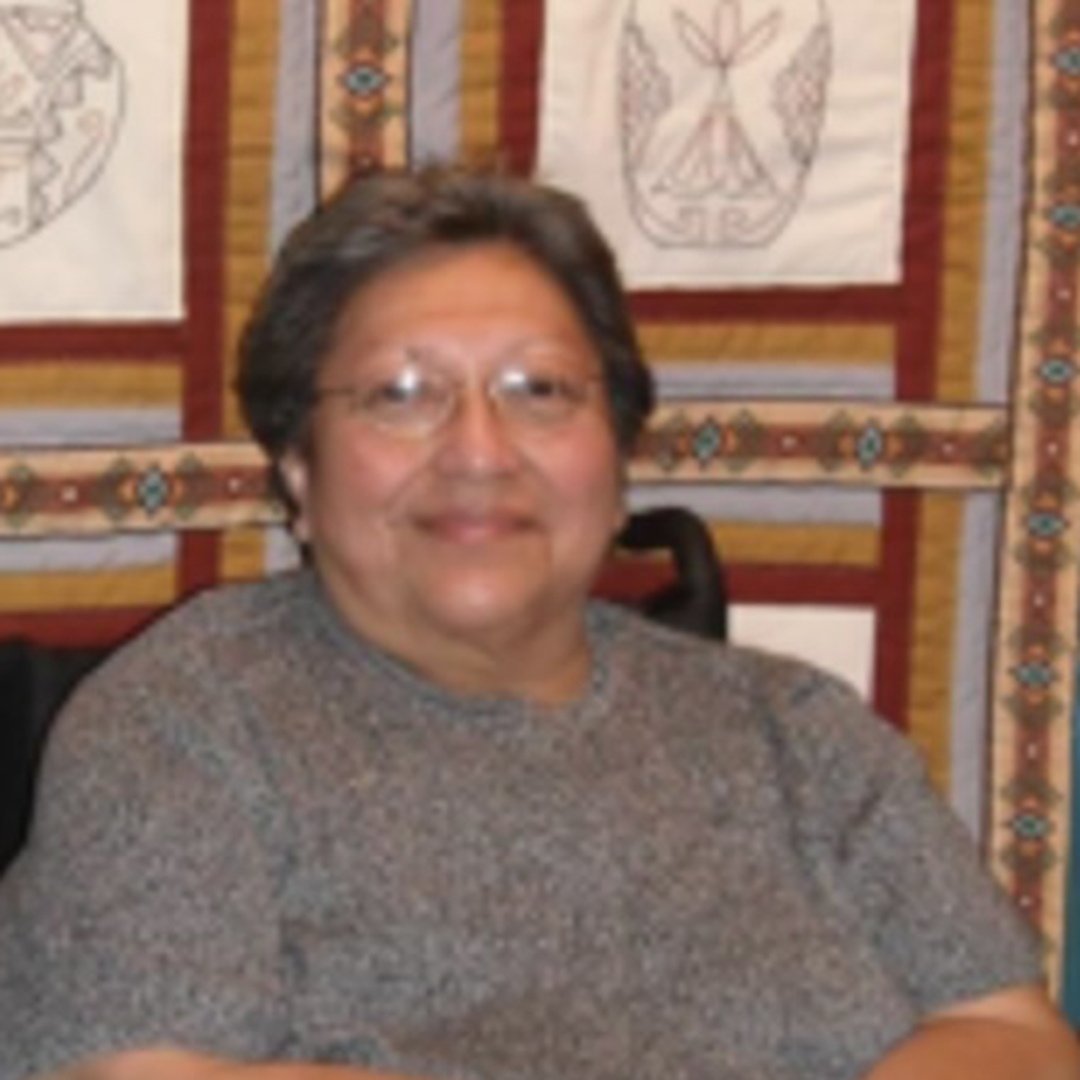
Lana Grant
Read More
Lana was immensely proud of her Native American heritage and was a member of the Fox Clan of the Sac & Fox Nation. At the age of six she was stricken with polio, but she refused to let the disease define her and the crutches and wheelchairs became the chariots of her legs. In 1988 she was the driving force and founder of the Sac and Fox National Public Library. Serving as library director from 1987 to 1995, she also was the editor of the monthly Sac and Fox News. Moving to Norman, she was employed by the University of Oklahoma at the Sam Noble Museum of Natural History. Upon her retirement she became a museum volunteer. Her bookshelves are full of her great range of interest from birds and animals to American Indian history, poetry and children’s literature. She was truly a noble person who overcame the odds against her.
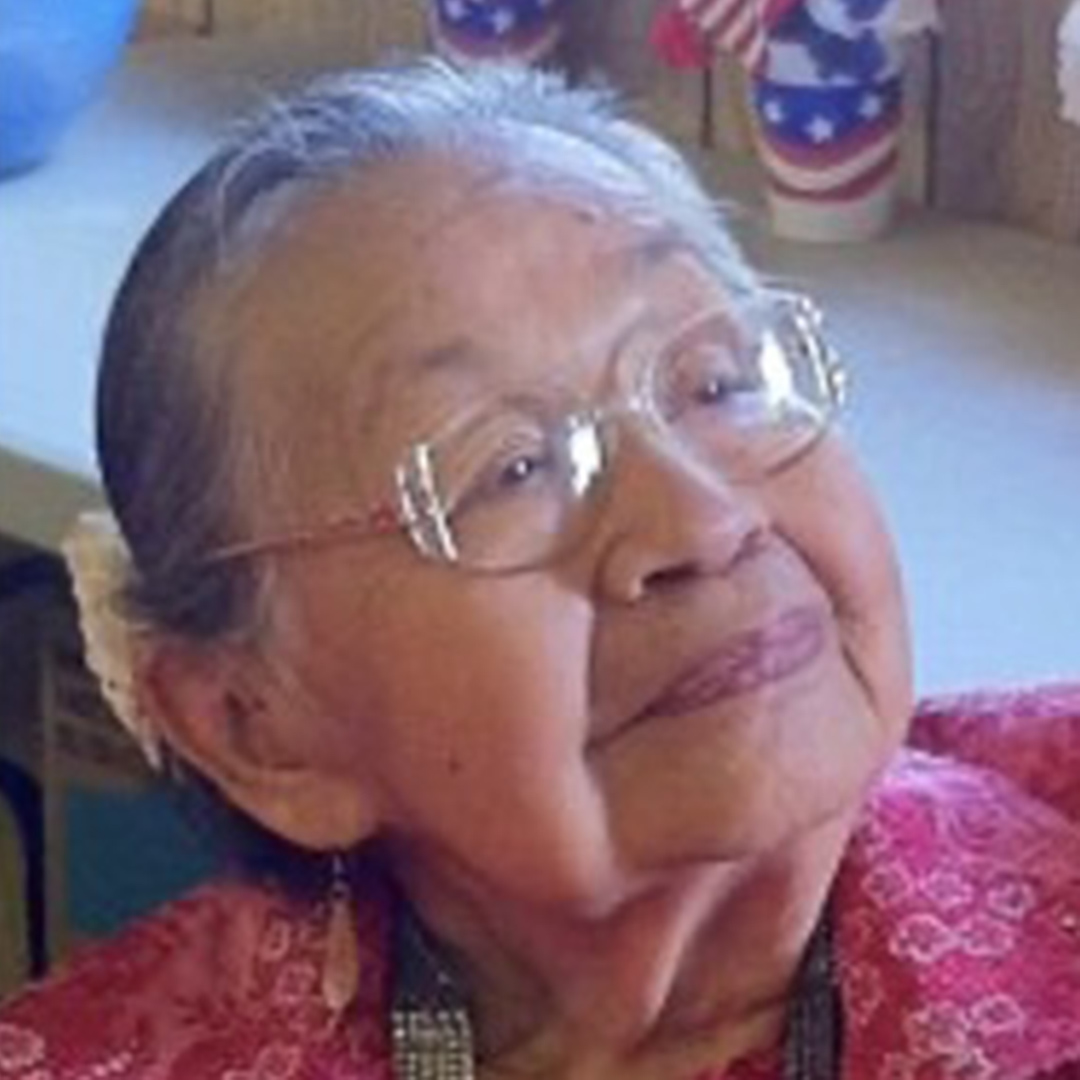
Josephine Wildcat Bigler
Read More
Josephine proudly represented Euchee ways and Oklahoma life. When she and her husband retired in 1988, they moved back to Sapulpa, OK from Milwaukee. Josephine became active once again at Pickett Chapel, leading the United Methodist Women (UMW) Unit at Pickett. In 2000, she was on the steering committee for the UMW National Conference in Tulsa. Josephine was one of four remaining elders that were native born fluent speakers. She worked with the various Euchee language classes over the last 25 years which helped create the first new speakers of Euchee in many decades. Due to her numerous works, in the fall of 2014 Southeastern Oklahoma State University recognized Josephine with a Distinguished Alumni Award, of which she was very honored.
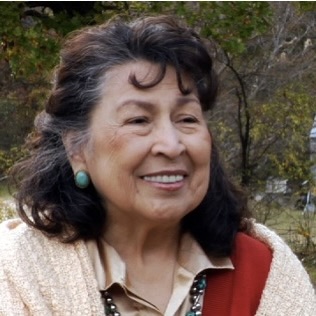
Margaret McKane Mauldin
Read More
Margaret McKane Mauldin dedicated her life to revitalizing and teaching the Mvskoke language. She grew up speaking the language in her family’s original allotment home west of Okemah, Oklahoma, with her mother, who refused to ever speak English. As an adult, she recognized the decline of the Mvskokelanguage among the Creek people. Efforts by the state government to declare English the only official language of Oklahoma inspired her to take action. She began developing curriculum and teaching the language and traditional Creek hymns in her home. Her work drew the attention of linguist Jack Martin, with whom she spent many years documenting the language. Together they co-authored A Dictionary of Creek / Muscogee, and several collections of stories in the language with English translation.
From 1996 to 2014 she taught the Mvskoke language at the University of Oklahoma. Her work continues to inspire the next generation of Mvskokespeakers and teachers. Her legacy as a language teacher at OU was carried on by her daughter, Gloria McCarty and her former student, Melanie Frye. Through Margaret McKane Mauldin’s tireless efforts, the Mvskoke language is on much firmer ground.

Brenda Samuels
Read More
Brenda Taylor Samuels was Mississippi Band of Choctaw Indian and an enrolled member of the Choctaw Nation of Oklahoma. She was raised in Bently, Oklahoma by her maternal grandmother, Virgie Peters. This is where she spoke the Chahta language fluently, learning and living the Chahta culture. In 2001, The Choctaw Nation wanted to preserve the Chahta Language; she and her husband Norris Samuels signed up to become community teachers within the Oklahoma City area. Brenda made sure that Chahta Youth in the Oklahoma City area would be involved when it came to Native recognition, most importantly when it came to Choctaw Nation. The youth language class, Chahta Ulla, would participate in the Oklahoma Native American Youth Language Fair annually, placing in several divisions. She started the first summer Youth Immersion Language Camp in the Oklahoma City area. In 2002, The University of Oklahoma had a position open for a Choctaw Language Instructor. Henry Willis along with Leroy Sealy, approached Brenda to recruit her for the instructor teaching position. She started teaching at the University of Oklahoma that May. She made teaching the language enjoyable, often introducing these college students to a Native culture they had never been introduced before.

Virgil Swift
Read More
Virgil was a member of Indian Spring Indian Baptist Church and a member of the Wichita Tribe, where he served as an officer on the executive committee. He also was the historical preservation representative for the Tribe and served as chairman of the Wichita Housing Authority. He was the Native American Graves Protection and Repatriation Act representative for the Wichita Tribe. He was instrumental in the development of the Wichita and Affiliated Tribes Cultural Center in Anadarko. He also served as commander of the Southwest Oklahoma Vietnam Veteran’s Association.